Exploring pools, tracking positions and notifications on BaniPool are free; a platform fee can only apply to certain transactions (swap, Zap, pool creation, bridge, automated keeper) with a maximum locked in the smart contract, plus third-party costs such as network gas and DEX fees. Funds stay safe because BaniPool is non-custodial: you sign every transaction yourself and funds are never deposited with BaniPool.
← All articles · Baca dalam Bahasa Indonesia
BaniPool Fees & Fund Safety: What Is Free and What Costs
November 11, 2026
BaniPool fees for swaps, Zap, pool creation, bridge and keeper — including on-chain maximums — plus how your funds stay safe because BaniPool is non-custodial.
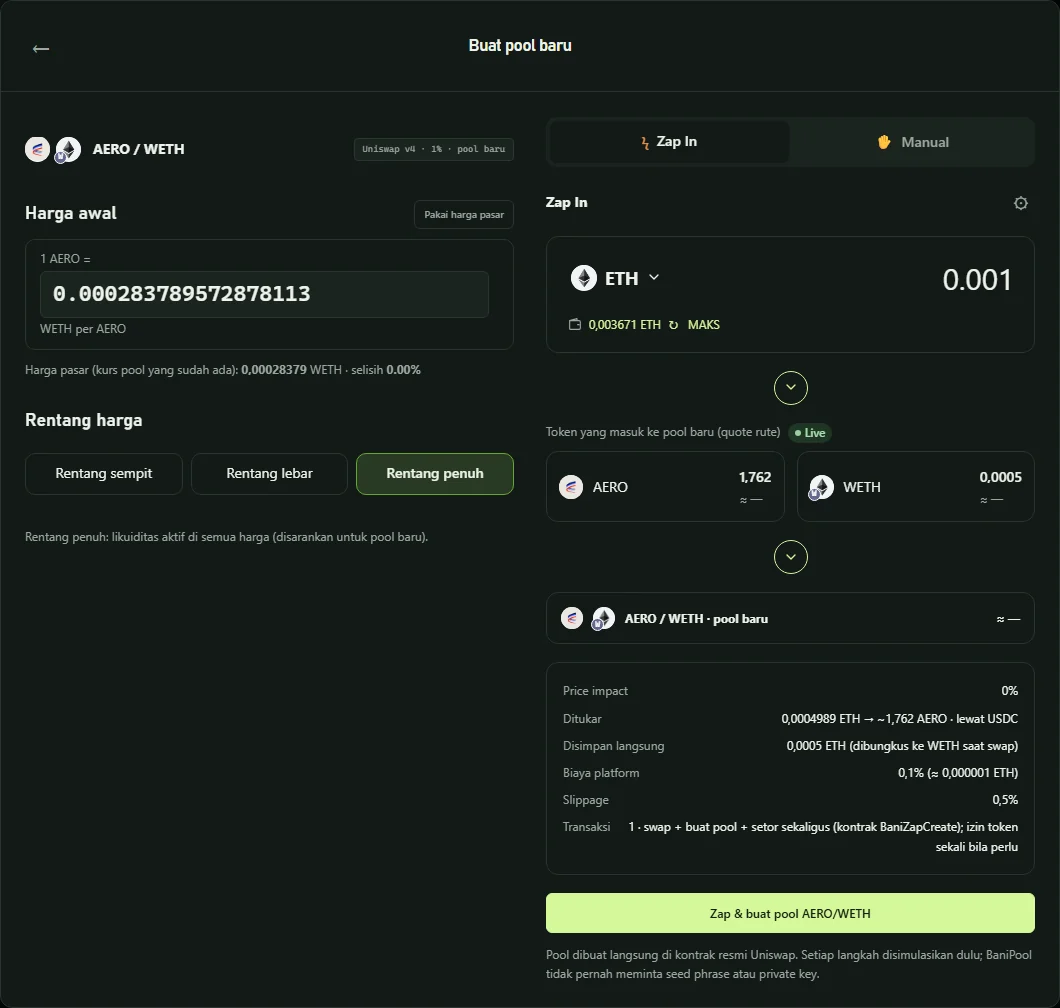
BaniPool fees are always shown before you sign — as "Platform fee x% (≈ $y)" or "Free". Maximums are enforced in the smart contracts, so they cannot be raised silently. This article lists the fee for each feature, the third-party costs you still pay, and how fund safety works because BaniPool is non-custodial.
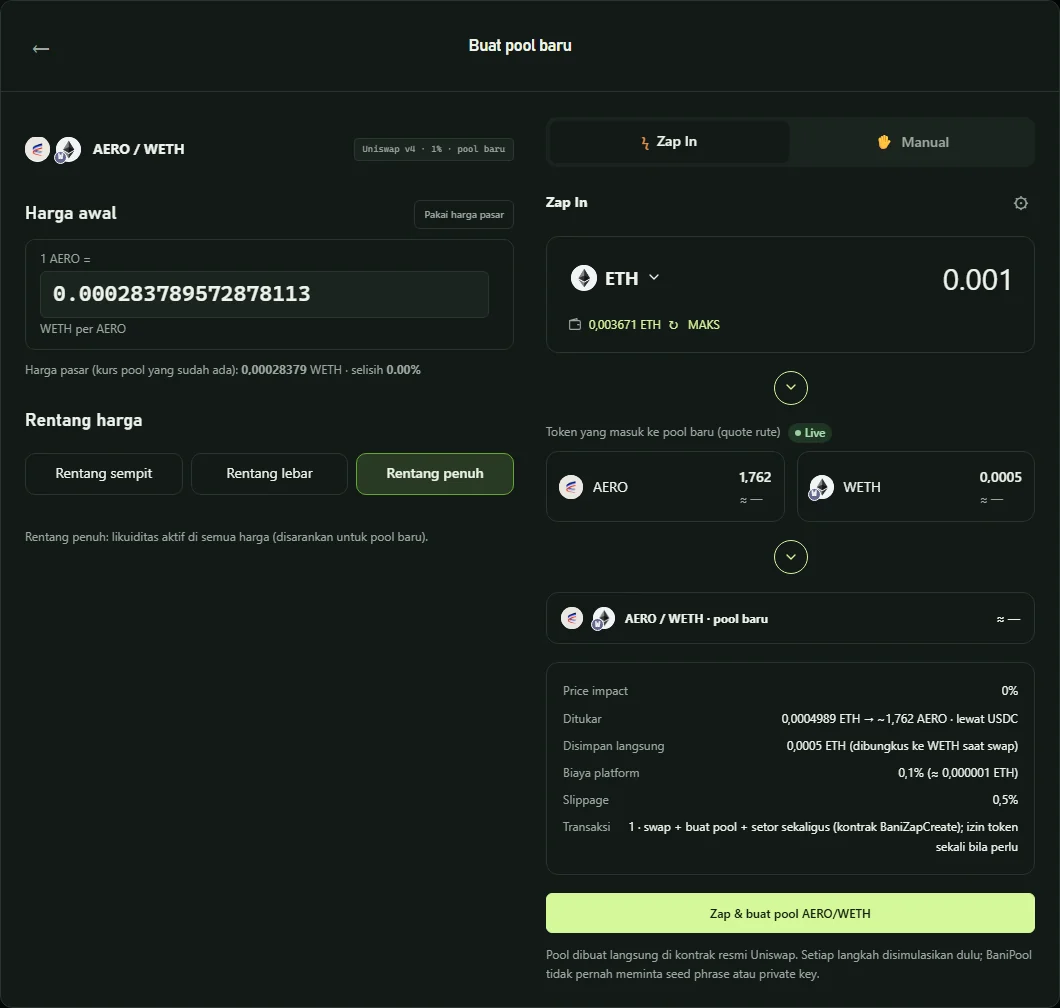
What is free
- Browsing pools, tokens, wallet profiles, positions and Radar.
- Direct deposits (two tokens, no swap) — EVM and Solana.
- Manual mode when creating a pool.
- Manual withdrawals and fee claims.
- Rebalance and exit executed by the keeper.
- Private mempool — BaniPool takes no fee; you only pay the Jito tip (Solana) or normal gas (EVM private RPC).
What may carry a platform fee
| Feature | How it is taken | On-chain cap |
|---|---|---|
| Swap & Zap | From the swap output before it is sent to you | Max 1% |
| Create pool (one-transaction Zap) | From the token you pay with | Max 1% |
| Bridge | Sent before the rest is deposited to Across | Shown in the quote |
| Solana Zap (Orca, Raydium) | Same percentage as EVM | Shown before signing |
| Automation (keeper compound) | Written in the keeper policy you sign | Max 10% of the compound |
The current rate is always on the confirmation screen.
Third-party costs
Paid to the network or protocols, separate from BaniPool:
- Gas / network fees — paid to validators.
- Pool fees — paid by traders to LPs (including when Zap swaps part of your tokens).
- Solana account rent — e.g. ~0.04 SOL for a Meteora DLMM position, refunded when the position is closed.
- Across bridge relayer fees.
- Jito tips for the Solana private mempool (~0.0001–0.002 SOL).
How your funds stay safe
- Non-custodial — assets stay in your wallet or in protocol contracts in your name. BaniPool never holds funds or private keys.
- Simulation before signing — transactions that would fail are stopped before they cost gas.
- Limited approvals — token approvals for the exact amount, never unlimited.
- Results always go to your wallet — Zap, keeper and vault router contracts send output to the position owner.
- Token security checks — A–F grades and a scam-token blacklist.
Remaining risks: smart contract risk (third-party protocols and BaniPool contracts, reviewed internally and not yet audited by a third party), market risk (impermanent loss, slippage), and token risk. Start small.
FAQ
What if the BaniPool website goes down?
Your funds remain accessible directly through the protocol contracts, e.g. the official Uniswap or Orca interfaces, or a block explorer.
Why did my transaction fail?
Usually the price moved beyond your slippage, balance or approval was insufficient, the amount was too small, or the quote expired. Request a new quote.
How do I revoke approvals?
NFT approvals to the Zap and keeper contracts can be revoked from the position page and keeper panel. Token approvals can be checked with tools like revoke.cash.
What data does BaniPool store?
Your wallet address at login, watchlist, preferences, automation rules, and transactions made through BaniPool. Email only if you link it. Visit statistics use no tracking cookies.
Why are my position's fees small when the token's volume is huge?
Routers split each swap across all pools by depth. Your fees are proportional to your share of liquidity at the active price, not the token's total volume.
Related articles
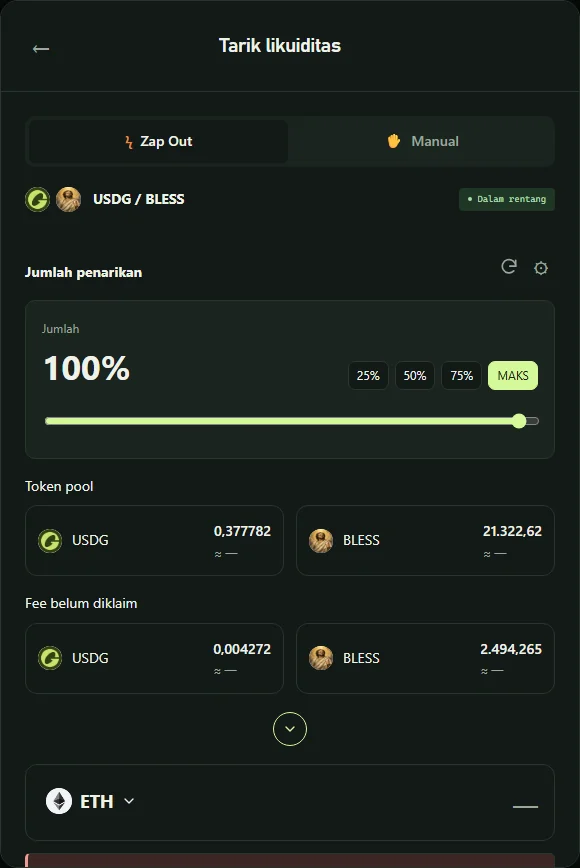
How to Claim LP Fees, Compound & Remove Liquidity (Zap Out to 1 Token)
Claim liquidity provider fees, compound them back into the position, add liquidity, and remove liquidity partially or fully — including Zap Out to a single token like USDC or SOL.
BaniPool vs Revert Finance vs Krystal vs DeBank: Which LP Tool Fits You?
A neutral comparison of BaniPool, Revert Finance, Krystal and DeBank for liquidity providers: tool type, networks, adding liquidity, automation, and when to pick which.
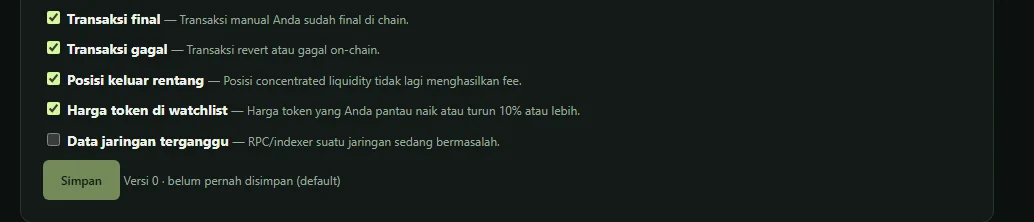
How to Connect BaniPool to Telegram: LP Position Alerts & Bot
Step-by-step guide to connecting your BaniPool wallet to the @BaniPool_bot Telegram bot: sign up with your wallet, press Connect Telegram in Settings, then Start. Plus /positions, /pnl and /price.