Quick answerCreating a Uniswap liquidity pool for your token means registering a new pair (for example TOKEN/WETH or TOKEN/USDC) on Uniswap v2, v3 or v4, setting the fee tier and initial price, and adding the first liquidity. Uniswap runs on many EVM networks; the cost is mostly gas, which is expensive on Ethereum mainnet and only a few cents on L2s such as Base or Arbitrum.
| Version | Traits |
|---|
| Uniswap v2 | Full-range liquidity, 0.3% fee |
| Uniswap v3 | Concentrated liquidity, choice of fee tiers |
| Uniswap v4 | Like v3 in a single contract, supports hooks |
Create a Uniswap liquidity pool for your token on Base, BNB Chain, Ethereum, Arbitrum, Robinhood Chain and more: fee tier, initial price, and first liquidity in 1 transaction.
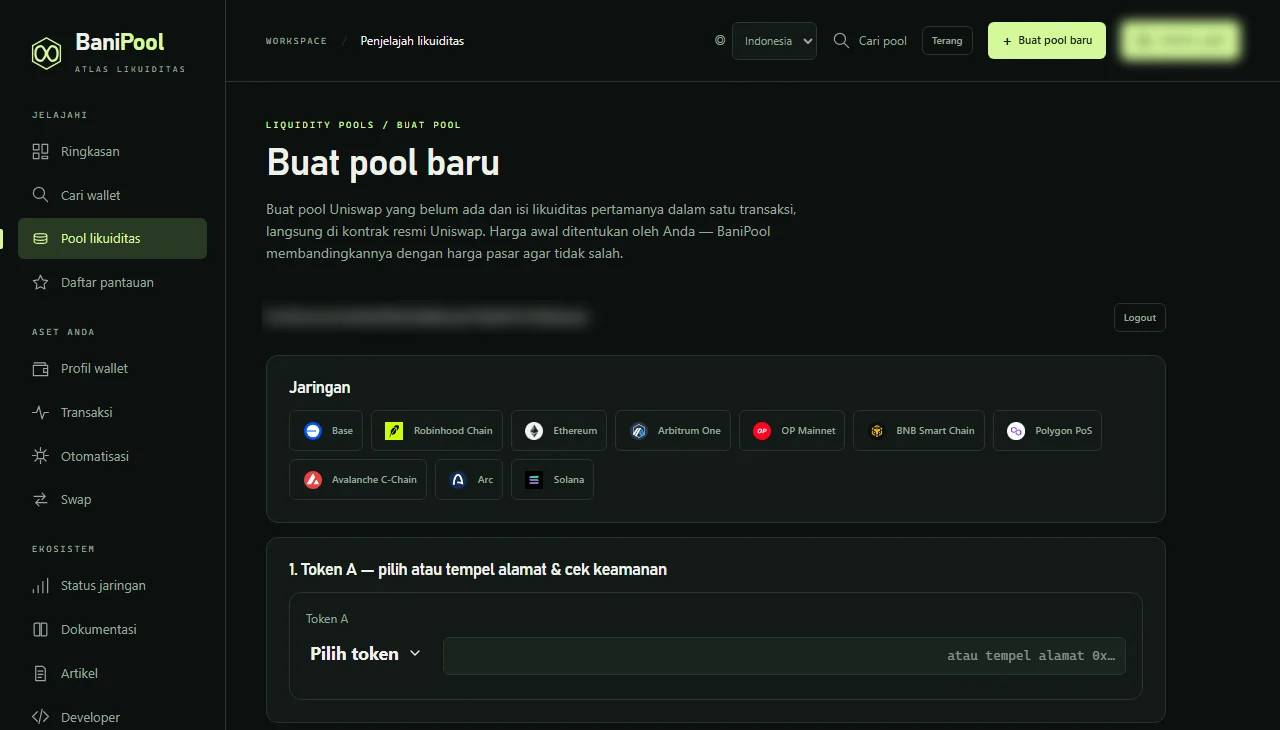
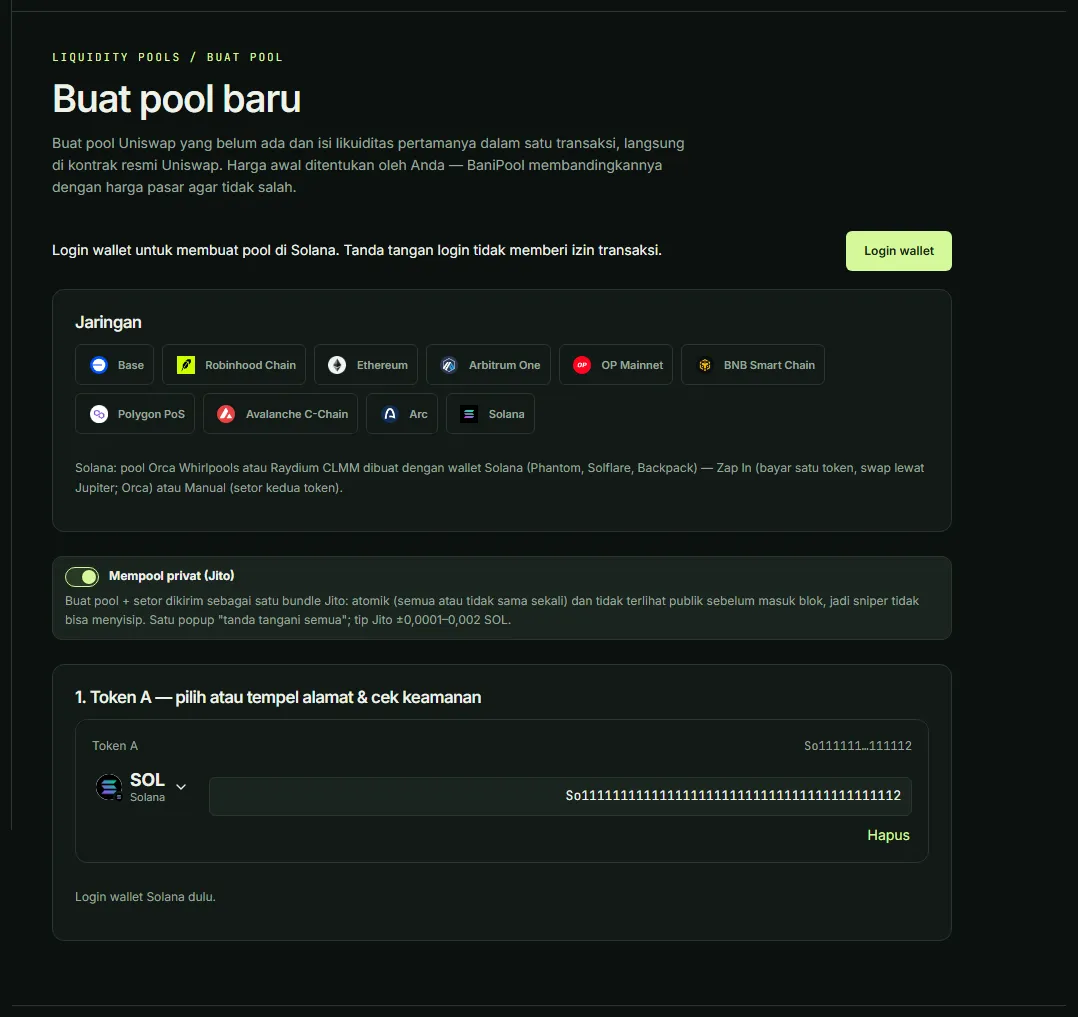
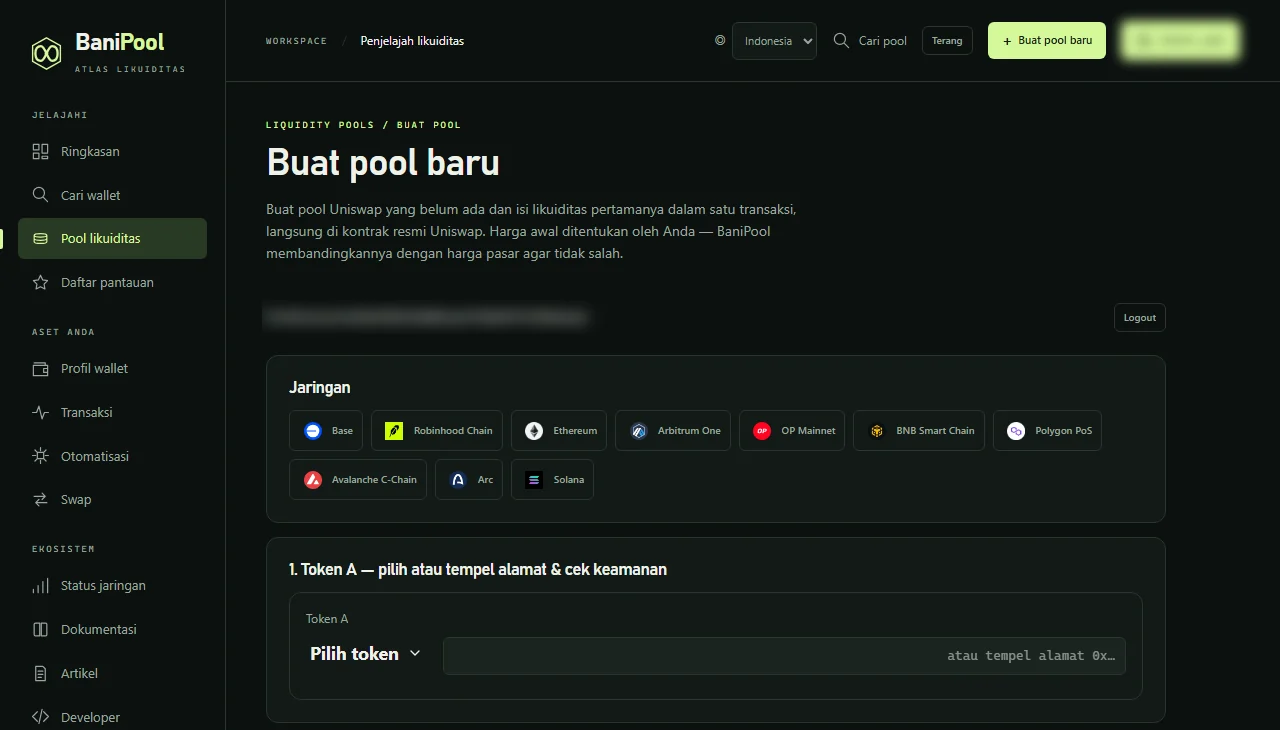
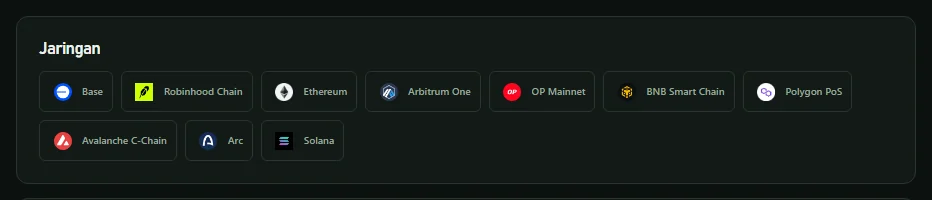
How to create a Uniswap liquidity pool for a new token — or for a pair that has no pool yet — takes one flow on BaniPool: choose the network, two tokens, fee tier and initial price, then create the pool and seed its first liquidity in a single transaction, directly on the official Uniswap contracts. This guide covers Uniswap v2, v3 and v4 on 9 EVM networks: Base, Robinhood Chain, Ethereum, Arbitrum One, OP Mainnet, BNB Smart Chain, Polygon PoS, Avalanche C-Chain and Arc.
Before you start
- An EVM wallet (MetaMask, Rabby, Coinbase Wallet or WalletConnect).
- The tokens to deposit plus native gas (ETH, BNB, POL, AVAX, or USDC on Arc).
- Both tokens' contract addresses from official sources — many fake tokens reuse names.
For Solana, see how to create a Solana liquidity pool.
Steps to create a Uniswap pool
1. Open Create pool and log in
Click Create new pool at the top right and connect your wallet. The login signature costs no gas and grants no transaction permission.
2. Choose the network
Pick where the pool will live. Your choice is remembered in the browser.
3. Token A and Token B
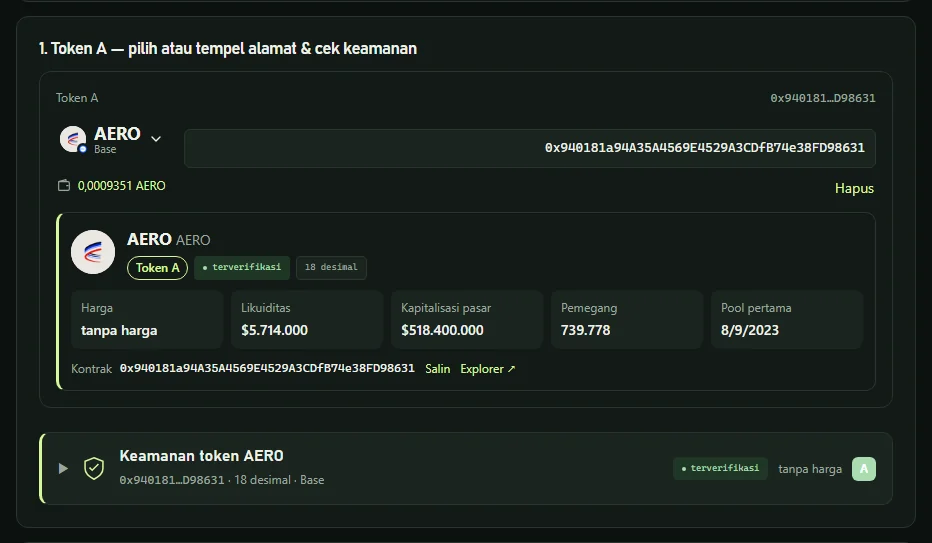
Click Select token or paste a 0x… address. BaniPool shows price, liquidity, market cap, holder count, first-pool date and an A–F security check. Tokens graded D/F or on the blacklist require a risk confirmation.
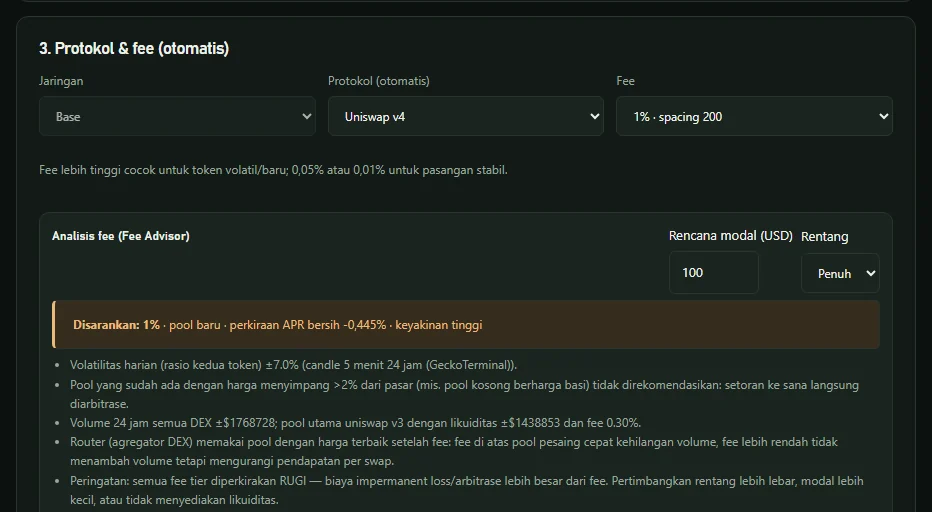
4. Protocol and fee tier (automatic)
BaniPool detects the protocol (Uniswap v3 → v4 → v2) and selects a fee tier that has no pool yet. Fee Advisor compares every tier: capturable volume, estimated fee APR, impermanent loss cost and net APR — the recommendation is marked ★. Uniswap v4 also accepts custom fees from 0.0001% to 10%. If a pool already exists at that fee, BaniPool offers Open pool to add liquidity there instead.
5. Initial price and range
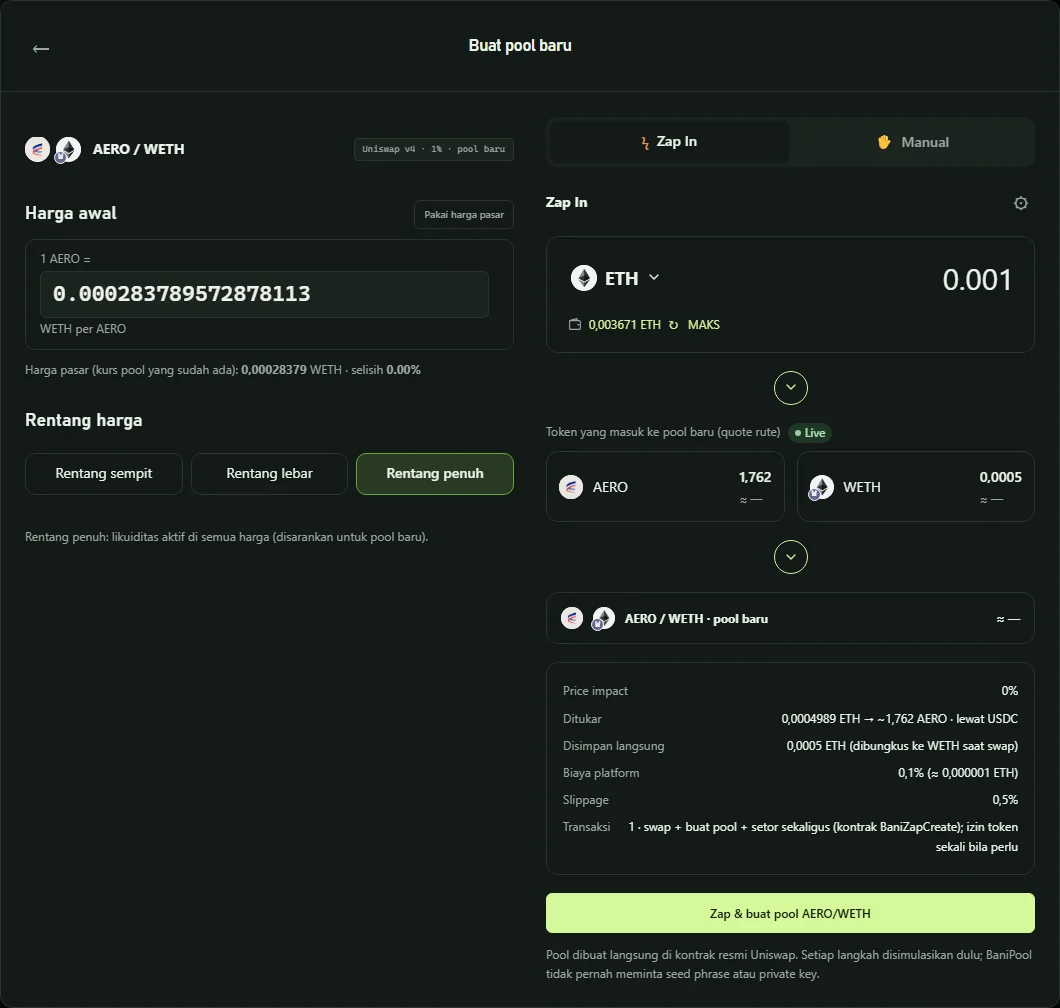
- Initial price: click Use market price. The deviation from market is always shown; large deviations need confirmation (above 20% only in Expert Mode), because a mispriced pool is drained by arbitrage immediately.
- Range: Full range is recommended for new pools. Narrow/wide ranges earn more per dollar but can go out of range.
How to choose all three: how to choose a fee tier and initial price.
6. Zap In or Manual
- Zap In — just one token (e.g. ETH). BaniPool computes how much to swap, then swap + create pool + deposit in one transaction (BaniZapCreate contract).
- Manual — deposit both tokens; enter one amount and the other is computed. No platform fee.
7. Confirm in your wallet
Token approvals are always for the exact amount. Once done, you get Open new pool and View your position links, and a security check of the new pool runs immediately.
Cost of creating a pool per network
Only gas + your first deposit (+ platform fee with Zap, max 1%). Cheapest gas: Base, Arbitrum, OP, Robinhood Chain, Polygon, BNB Chain; most expensive: Ethereum.
FAQ
Uniswap v2, v3 or v4 for a new token?
v3 is the most common and supported by every router. v4 supports native tokens and custom fees. v2 is the simplest (always full range), and its initial price is the ratio of the two deposited amounts.
Will my pool show up in aggregators right away?
Uniswap pools are immediately discoverable by routers that index Uniswap; BaniPool lists it in the explorer once indexed.
How do I protect pool creation from bots?
Seed liquidity together with creation (one transaction), use the market price, and on Ethereum/BNB use a private RPC — see what is a sandwich attack.