Quick answerAutomated rebalancing moves a concentrated-liquidity position (Uniswap v3/v4, Orca) to a new price range when the price leaves the old one, while auto-compounding reinvests the accumulated swap fees back into the position. Uniswap v3 does neither on its own: fees sit uncollected until claimed, and an out-of-range position stops earning fees.
BaniPool data as of November 13, 2026: 92.6% of the TVL across the 58 large pools (TVL ≥ $1M) we track sits in concentrated-liquidity pools — the pool type whose positions can go out of range.
| Manual management | Automated rebalance & compound |
|---|
| Price leaves the range | No fees until you act | Position moved to a new range |
| Swap fees | Pile up until claimed | Added back to the position |
| Main risk | Forgetting / acting late | Repeated rebalances in a choppy market (whipsaw) lock in impermanent loss |
Live data from the BaniPool index (pools with TVL ≥ $1M), refreshed every 30 minutes — full DeFi liquidity report
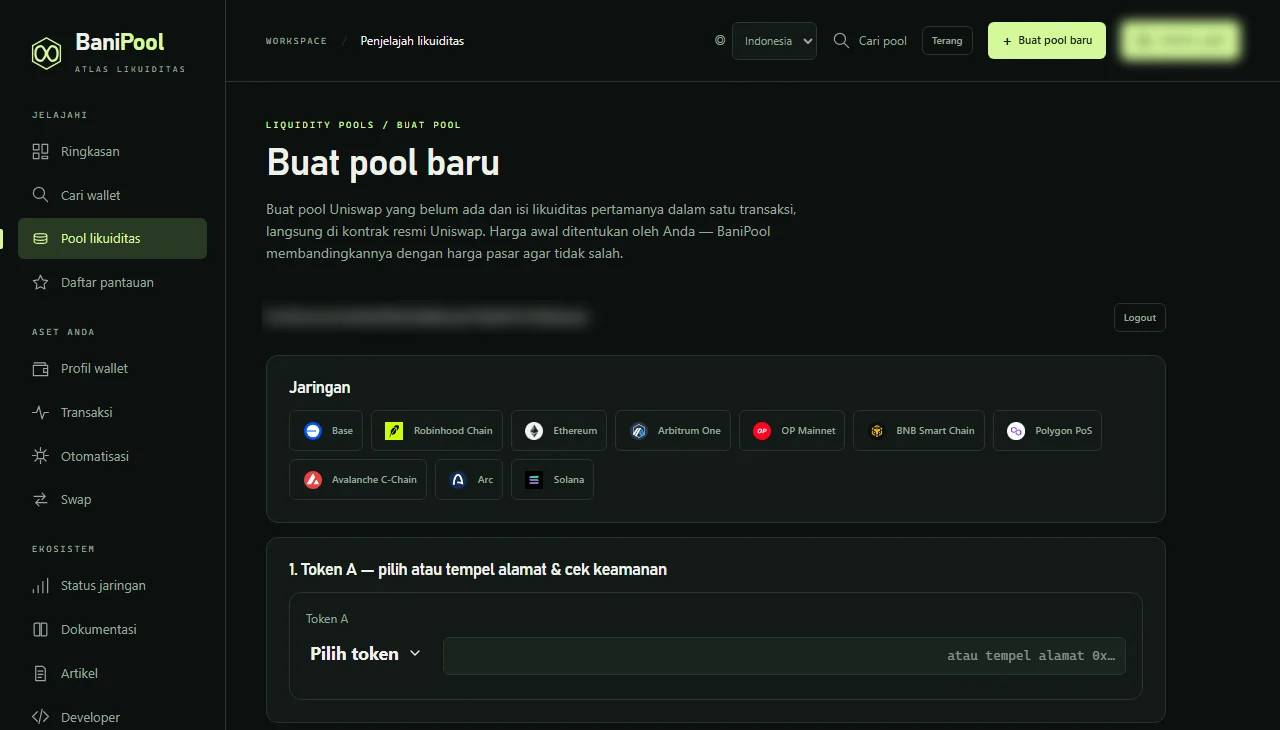
Automatically rebalance Uniswap v3/v4 and Orca LP positions when out of range, auto-compound fees, and auto-exit with the BaniPool keeper — Paper, Alert and Live modes.
Automated LP rebalancing solves concentrated liquidity's biggest problem: your position goes out of range while you sleep. On BaniPool you create automation rules for Uniswap v3/v4 (EVM) and Orca Whirlpools (Solana) positions: get alerted when out of range, or run auto-compounding, rebalancing or exit automatically through a keeper — within limits you sign on-chain yourself.
Why automate rebalancing?
When the price leaves your range, a concentrated position stops earning fees and turns into a single token. Manual rebalancing means watching charts constantly. A keeper does it for you: withdraws the position, swaps as needed, and opens a new range around the current price.
Creating an automation rule
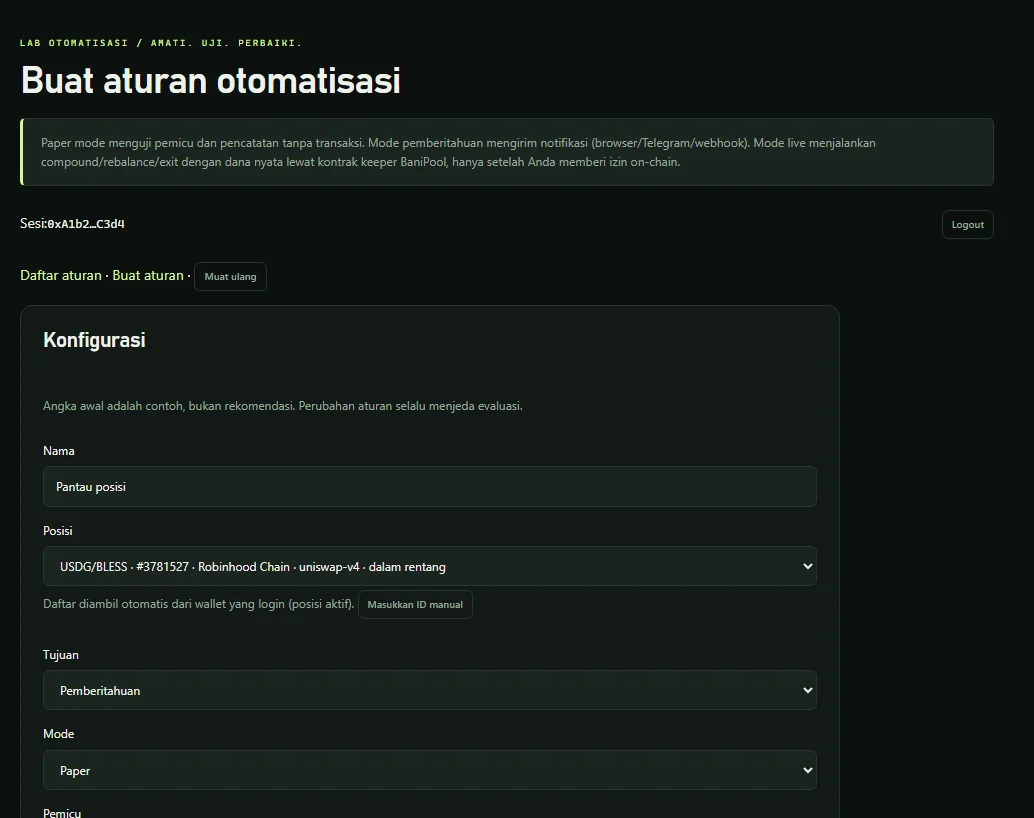
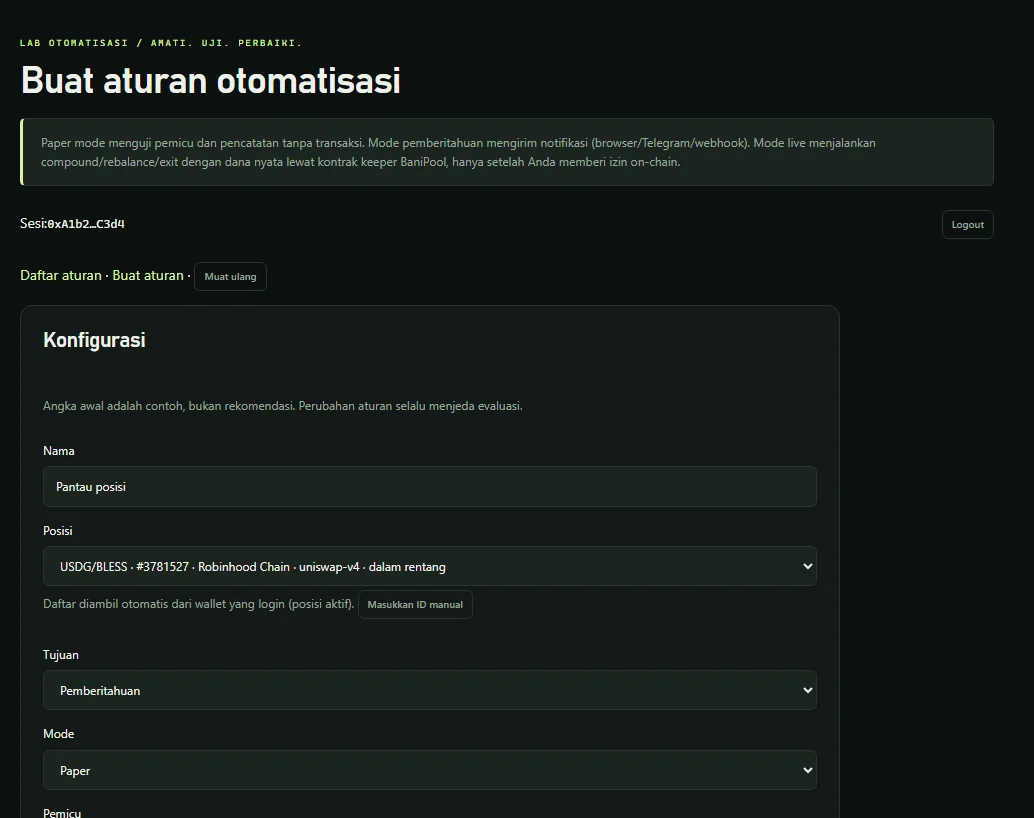
- Log in, open Automation, then click Create rule.
- Choose the Position (pulled from your wallet's active positions, or enter an ID).
- Choose a Goal: Alert, Compound, Rebalance or Exit.
- Choose a Trigger — e.g. out of range, or fees reaching a USD threshold — then set confirmation time, cooldown and daily limit.
Three modes
| Mode | What happens | Best for |
|---|
| Paper | Tests triggers and logging without transactions | Trying a rule |
| Alert | Browser, Telegram, email or webhook notifications | LPs who want to decide themselves |
| Live | Compound / rebalance / exit with real funds via the keeper contract | Fully automated LPs |
Live mode safety
Live mode requires two on-chain permissions that you sign yourself:
- a keeper policy — allowed actions, cooldown, daily limit, expiry and maximum slippage;
- a position NFT approval to the keeper contract.
The contract only rebalances/exits when the position is out of range, computes swap minimums itself, and always sends results to your wallet. On Ethereum and BNB Chain, keeper transactions go through private RPCs (Flashbots Protect, MEV Blocker, PancakeSwap MEV Guard, BlockRazor) so they cannot be sandwiched. Permissions can be revoked anytime from the keeper panel.
Cost
The keeper fee is only taken from compounds the keeper executes, per the policy you sign (max 10% of the compound). Rebalance, exit and actions you run yourself are free; keeper gas is paid by the keeper wallet.
Alerts without rules
With notifications on, BaniPool checks your active EVM and Solana positions every 15 minutes and sends out-of-range alerts (at most once a day per position) — see LP out-of-range alerts.
FAQ
Which DEXes support automated rebalancing?
Live keeper actions are available for Uniswap v3/v4 positions on EVM networks and Orca Whirlpools positions on Solana (via the BaniPool keeper program). Meteora DLMM and DAMM v2 support alerts (out of range, fee threshold).
What if the BaniPool site goes down?
Automation pauses until service recovers. Funds stay in the position, and keeper permissions can be revoked directly on-chain.
Does automated rebalancing remove impermanent loss?
No. Rebalancing keeps the position earning fees, but impermanent loss from price moves still happens — see impermanent loss explained.