Quick answerConcentrated liquidity (Uniswap v3, Orca, Meteora DLMM) places LP capital only within a chosen price range, so fees per dollar are much higher, but the position stops earning when the price leaves the range and needs maintenance. A full-range AMM (x·y=k: Uniswap v2, Raydium CPMM, PumpSwap) spreads liquidity over all prices: lower fees per dollar, but always active with no maintenance.
BaniPool data as of November 13, 2026: 92.6% of the TVL across the 58 large pools (TVL ≥ $1M) we track is in concentrated-liquidity pools.
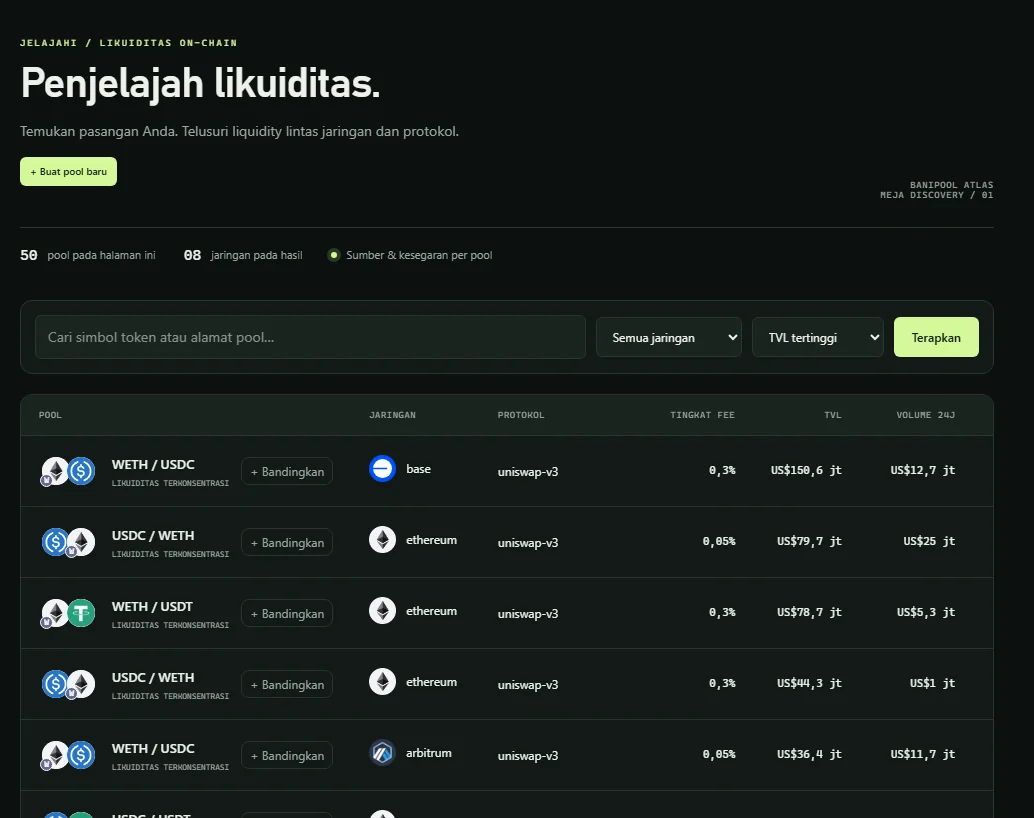
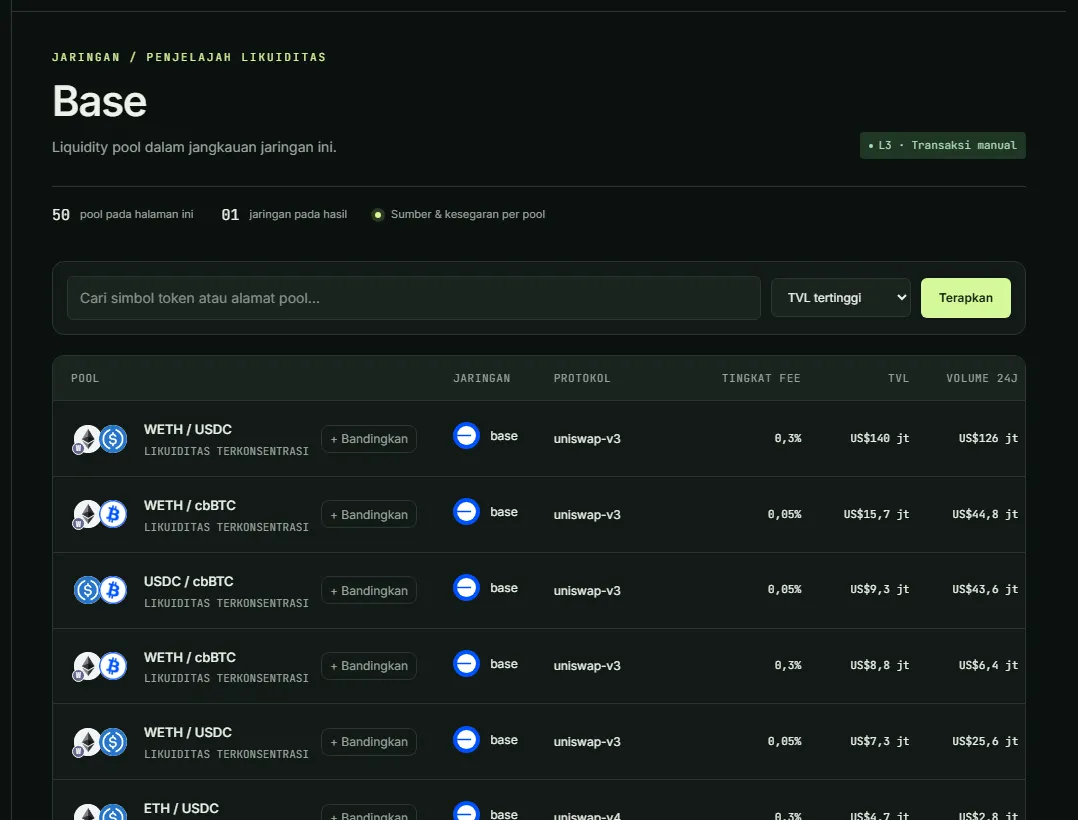
Live data from the BaniPool index (pools with TVL ≥ $1M), refreshed every 30 minutes — full DeFi liquidity report
Concentrated liquidity (Uniswap v3, Orca, Meteora DLMM) vs full-range AMMs (Uniswap v2, Raydium CPMM, PumpSwap): fees, risk, maintenance, and when to choose each.
Concentrated liquidity vs full-range AMM is the first decision you face before adding liquidity. A full-range AMM (the x·y=k formula) spreads liquidity across every price and never goes "out of range". Concentrated liquidity lets you focus capital in a chosen price range, so fees per dollar can multiply — as long as the position is maintained. This guide compares both with DEX examples, data, and a decision guide.
Side-by-side comparison
| Full-range AMM (x·y=k) | Concentrated liquidity |
|---|
| Example DEXes | Uniswap v2, Raydium CPMM, PumpSwap, Meteora DAMM v2 | Uniswap v3/v4, Aerodrome Slipstream, Orca Whirlpools, Raydium CLMM, Meteora DLMM |
| Price range | All prices | You choose |
| Fees per dollar | Lower | Higher while in range |
| Out of range? | Never | Yes — fees stop |
| Impermanent loss | Standard | Amplified in narrow ranges |
| Maintenance | Almost none | Needs rebalancing |
| Position form | LP token | NFT / position account |
Full-range AMM (x·y=k)
Your liquidity spans from zero to infinity. Only a small slice of it is used near the current price, so fees per dollar are lower. The advantage is simplicity: deposit both tokens at the current ratio and leave it. Fees go straight into position value (Raydium CPMM, PumpSwap) or are claimed separately (Meteora DAMM v2).
Good for: new tokens with wild price swings, passive LPs, and pools where most volume comes from routers.
Concentrated liquidity
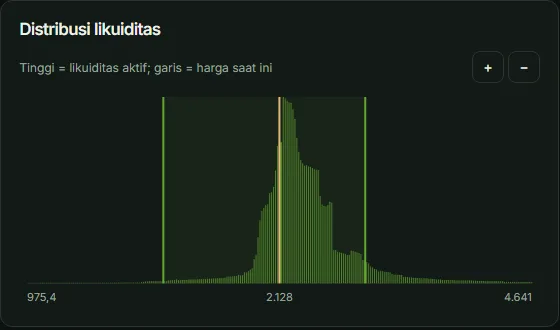
You pick a lower and upper price. While the price is inside, your capital provides as much depth as a much larger full-range position — and earns proportionally more fees. Real example (BaniPool data, November 10, 2026): SOL/USDC on Orca, 0.04%, TVL $24.5M, 24h volume $112M, Fee APR ~69%. Positions whose range covers the active price capture that rate in full.
Trade-offs:
- When the price leaves the range, the position holds one token only and stops earning fees.
- Impermanent loss inside the range is larger — see impermanent loss explained.
- It needs rebalancing: withdraw and re-add around the new price.
Meteora DLMM is a special variant with price bins and dynamic fees — see Meteora DLMM strategies.
Which earns more?
- Stable pairs (USDC/USDT, SOL/JitoSOL): concentrated liquidity with a narrow range almost always wins.
- Major volatile pairs (ETH/USDC, SOL/USDC): concentrated with a wider range, maintained by automation.
- New / meme tokens: full-range or a very wide range. Prices can move 10× in a day.
- No time to monitor: full-range, or concentrated with automated rebalancing.
On BaniPool
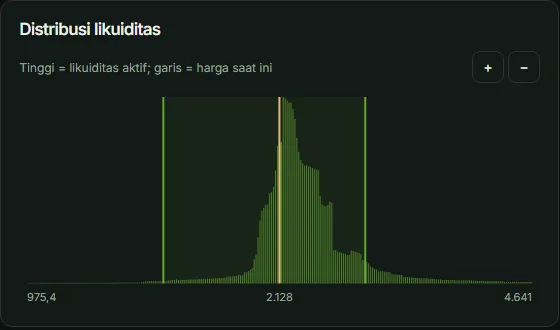
- EVM concentrated pools, Orca and Raydium CLMM use Pool Studio: price chart, liquidity distribution, fee simulator and range backtest.
- Raydium CPMM, PumpSwap, Meteora DAMM v2 and Meteora DLMM use the liquidity panel to deposit, withdraw (25/50/100%) and claim fees.
- Every transaction is simulated before you sign.
FAQ
Is concentrated liquidity always more profitable?
No. It wins while the price stays in range and fees exceed the amplified impermanent loss. If the price leaves the range often, full-range can do better.
What happens when a position goes out of range?
It holds a single token and earns no fees until the price returns or you move the range (rebalance).
Is Uniswap v4 concentrated liquidity?
Yes. Uniswap v4 uses concentrated liquidity like v3, plus custom fees and hooks.