Quick answerBridging moves assets such as ETH, WETH or USDC from one network to another (for example Ethereum → Base or Arbitrum → Robinhood Chain). Intent-based bridges such as Across usually finish in seconds to minutes because a relayer pays out on the destination network first and is reimbursed from the source network.
| Common route | Assets |
|---|
| Ethereum ↔ Base / Arbitrum / OP Mainnet | ETH, WETH, USDC |
| Base ↔ Arbitrum | ETH, USDC |
| To Robinhood Chain | ETH |
Bridge ETH, WETH and USDC between networks (Base, Arbitrum, Robinhood Chain, Ethereum and more) via Across, plus how to deposit stablecoins into Spark yield vaults.
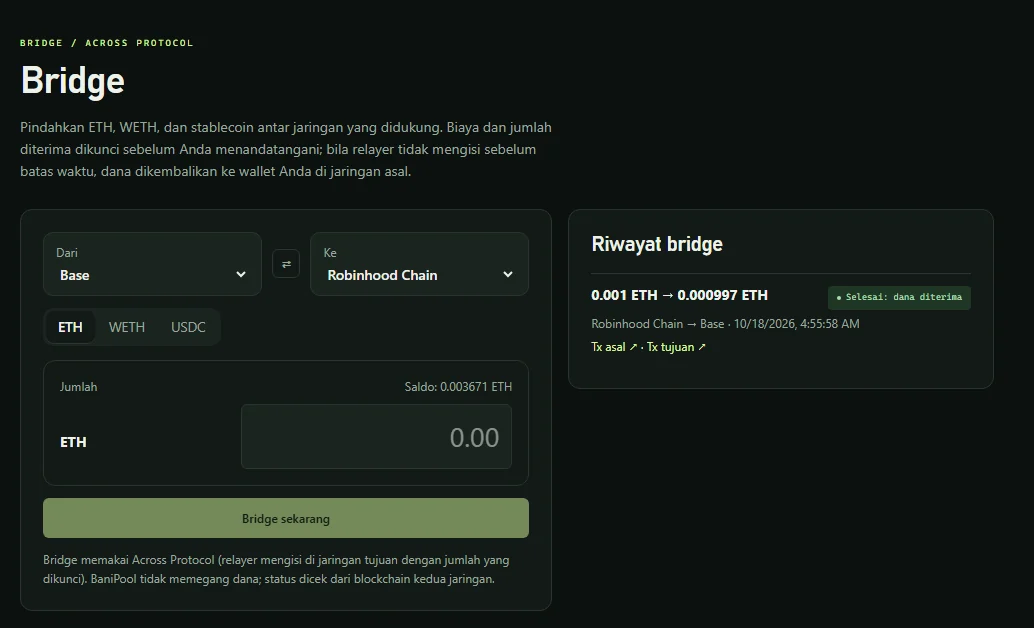
How to bridge ETH and USDC between networks is the first step before adding liquidity on a new chain — for example moving ETH from Base to Robinhood Chain, or USDC from Ethereum to Arbitrum. BaniPool's Bridge page moves ETH, WETH and stablecoins via Across Protocol, with the received amount locked before you sign. The same section offers Vaults to park stablecoins in official yield vaults.
How to bridge
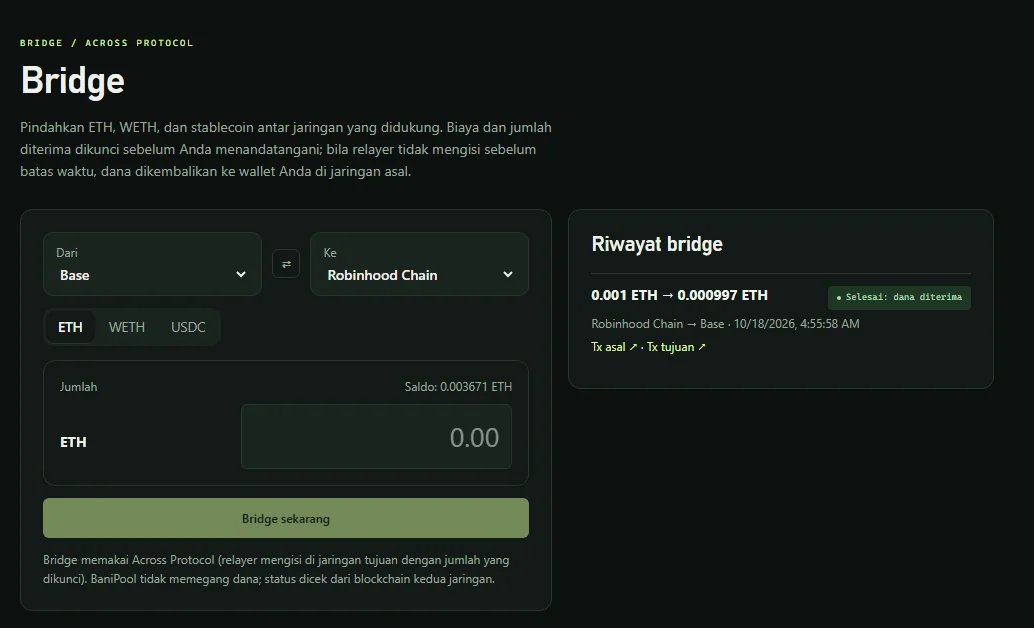
- Choose the From and To networks (the ⇄ button swaps them).
- Choose the asset and amount; your balance appears above the amount field.
- Review the fee and amount received, then click Bridge now.
- Track it under Bridge history.
How it works and why it is safe
- Across relayers fill the destination with the amount locked at quote time — usually within seconds to minutes.
- If it is not filled before the deadline, funds are refunded to your wallet on the source network.
- Status advances only with on-chain proof on both networks.
- Compared with native L2 → Ethereum bridges that can take ~7 days, Across finishes in minutes for a small fee.
Want to swap into another token at the same time? Use a cross-chain token swap.
Stablecoin vaults
The Vaults page lists official ERC-4626 vaults verified on-chain — for example Spark Savings USDG on Robinhood Chain and Spark USDC Vault on Base, Ethereum, Arbitrum, Optimism and Avalanche. Each card shows total vault assets and the value of 1 share.
- Click Deposit / Withdraw.
- Enter an amount; deposits go through BaniVaultRouter with a limited approval and minimum shares out.
- Shares go straight to your wallet.
Vault yield is set by the vault protocol (Spark), not BaniPool, and can change. Vaults suit idle stablecoins — without the impermanent loss of a liquidity pool.
FAQ
How long does bridging ETH to Robinhood Chain or Base take?
Usually seconds to a few minutes via Across.
What if a bridge fails?
If the relayer does not fill before the deadline, funds are refunded to your wallet on the source network.
Do stablecoin vaults have risks?
There is smart contract risk in the vault protocol, and yields can change. There is no impermanent loss.